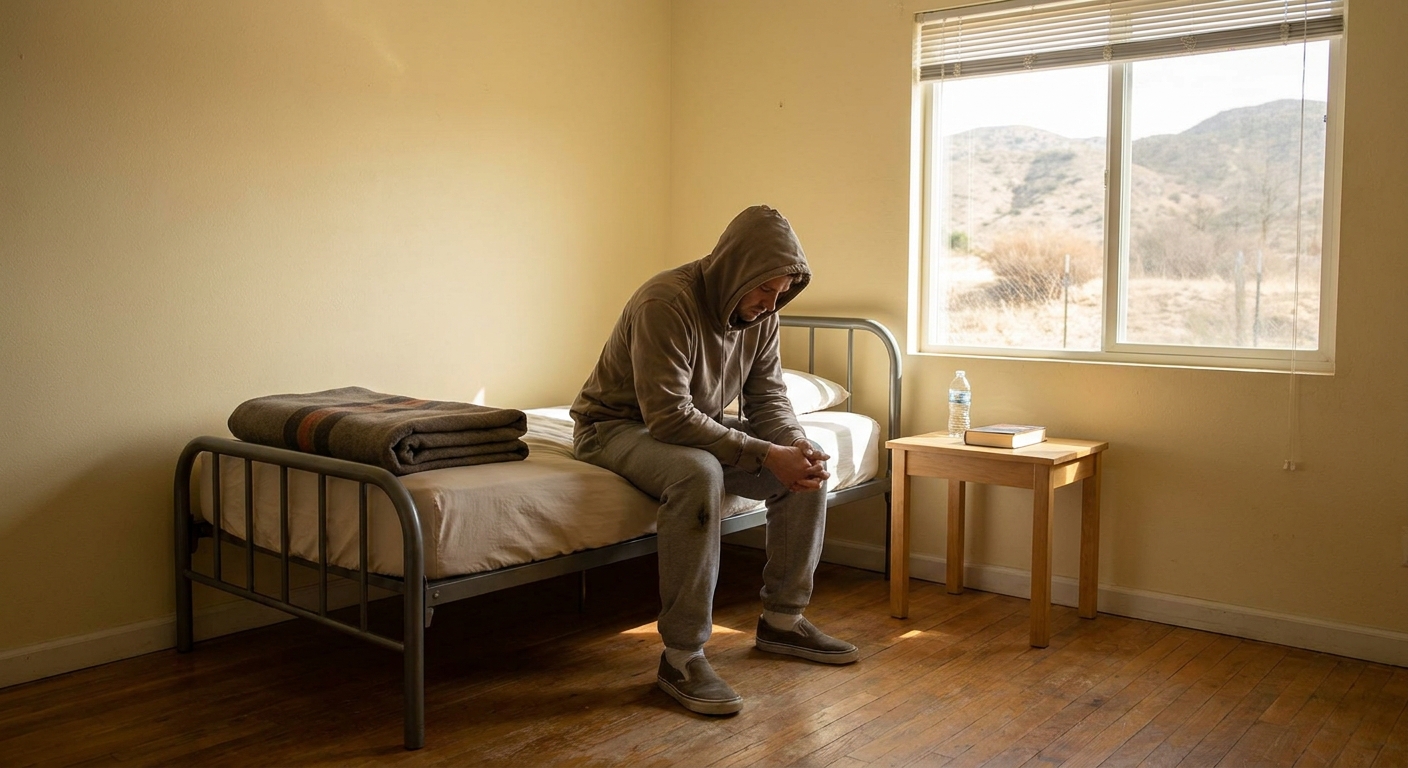
Outpatient rehab in Riverside, CA is one of the most common paths to recovery in the Inland Empire, and also one of the most misunderstood. This guide walks you through exactly what to expect: how it works, what it costs, how sessions fit into a real schedule, and how to tell whether it’s the right level of care for your situation.
What outpatient rehab actually is
According to SAMHSA’s 2023 National Survey on Drug Use and Health, roughly 93% of the 2.2 million people who received treatment for substance use disorders in a specialty facility did so without residential care. Outpatient rehab is not a lesser version of inpatient treatment. It is a structured, clinically supervised program you attend during the day or evening, then return home. You keep your job, stay with your family, and meet your court obligations while getting real help.
The key difference from inpatient or residential care is that you are not sleeping on-site. Choosing between these formats comes down to your clinical needs, your living situation, and the severity of your substance use. Outpatient is appropriate when you have a stable home environment, do not require 24-hour medical supervision, and need the flexibility to keep life functioning during treatment. It is not a substitute for medical detox or residential stabilization when those are clinically indicated. A good program helps you identify where to start, honestly.
The three levels you’ll encounter
Outpatient care is not one-size-fits-all. A 2022 NIDA analysis of treatment outcome data found that matching patients to the correct level of care intensity was one of the strongest predictors of 12-month sobriety. Three levels make up the continuum.
Standard outpatient typically runs one to three sessions per week, each lasting one to two hours. It suits people with mild to moderate substance use disorders who have already completed a higher level of care, or who have significant social supports in place. Intensive Outpatient (IOP) is the most common entry point for people managing work or family obligations, running nine or more hours of structured sessions per week, usually across three days. Partial Hospitalization (PHP) is the highest outpatient level, typically five days per week and six or more hours per day, functioning almost like a daytime residential program for people who need that density of support but can safely return home at night. Understanding how session frequency affects outcomes helps you match your schedule to the right tier before you make a single call.
What the intake process looks like in riverside
A 2020 study published in the Journal of Substance Abuse Treatment, analyzing 5,400 admissions across California programs, found that every day’s delay between first contact and intake appointment increased dropout risk by approximately 8%. Speed matters, and knowing what to expect reduces friction on your end.
The process starts with a screening call, usually 15 to 30 minutes. A counselor asks about your substance use history, any current medications, your legal situation, and your insurance. From there, a clinical assessment follows, either the same day or within a few days, depending on the program. That assessment determines your level of care. Insurance verification runs in parallel. Then scheduling begins.
Riverside County residents dealing with court deadlines, probation officer timelines, or employer drug testing windows should name those constraints during the screening call. Programs that serve this population regularly know how to prioritize intake for people on legal timelines. Before you call, have your insurance card, a photo ID, any court paperwork or probation conditions, and the name of your probation officer or attorney ready. That is what moves an intake forward quickly.
How payment and insurance work here
A 2021 study by the California Health Care Foundation found that 43% of Riverside County adults who needed but did not receive substance use treatment cited cost or insurance confusion as the reason. The system is genuinely navigable once you understand the three tracks.
Medi-Cal covers outpatient substance use treatment through the Drug Medi-Cal Organized Delivery System (DMC-ODS), which Riverside County participates in. If you have Medi-Cal, you have access to certified outpatient programs at no cost. California’s SB 855, signed in 2021, requires commercial insurers to cover substance use disorder treatment at the same level as other medical conditions. That law applies to most PPO and HMO plans issued in California, which means your employer-sponsored or individually purchased plan cannot legally deny outpatient rehab coverage on the basis that it is not medically necessary when clinical criteria are met. Private pay is the third track, with sliding-scale fees available at many Riverside County programs.
Before booking an intake, ask one question: “Do you accept my specific insurance plan or Medi-Cal, and what is my out-of-pocket cost after verification?” Get the answer in writing. That single question eliminates most billing surprises.
What a typical week in outpatient rehab looks like
A 2019 study in Drug and Alcohol Dependence tracked 1,200 outpatient participants and found that clients attending at least nine structured hours per week were 2.4 times more likely to report sustained sobriety at six months than those with fewer weekly contact hours. Structure is the mechanism.
In a standard IOP week, you attend group therapy three to four times, usually 90 minutes to two hours per session. One individual counseling session per week, typically 45 to 60 minutes, addresses your specific circumstances. Case management check-ins cover employment, housing, legal obligations, and family responsibilities. Drug testing is routine and expected. Programs in Riverside commonly offer both morning and evening session tracks to accommodate working adults. If you have children in school, morning tracks often run 9 a.m. to noon. Evening tracks typically run 6 to 9 p.m. Balancing treatment with a full-time job is genuinely possible at this level of care when you match your schedule to the right track before committing. Pull up your work calendar and your childcare schedule, then ask any program you contact which specific days and times each track meets.
Court-ordered and probation-supervised treatment
A 2021 National Institute of Justice analysis of 76,000 court-mandated treatment participants found that long-term sobriety outcomes for court-ordered participants were statistically comparable to those who entered voluntarily, provided the program delivered real clinical services rather than attendance-only compliance. The motivation for walking in does not determine whether treatment works.
If you are entering outpatient rehab under a DUI, court order, or probation or parole condition, compliance reporting is the piece most people underestimate. Riverside County courts and probation departments expect documented attendance, drug test results, and progress reports from your program. Programs experienced with this population handle that reporting as a standard function. What you need to confirm before your first session: how often the program submits reports, who receives them, and what the program’s policy is when a session is missed. One missed session handled through proper notification is different from an unexplained absence. Ask that question directly before you start.
Treatment for co-occurring mental health conditions
SAMHSA’s 2023 National Survey on Drug Use and Health found that approximately 21.5 million adults in the U.S. had co-occurring substance use and mental health disorders, yet fewer than 8% received treatment for both conditions simultaneously. In Riverside County, depression, anxiety, and PTSD are common in people entering outpatient programs, often preceding the substance use itself.
Programs that only treat the substance use without addressing the underlying mental health condition produce lower retention rates. Integrated dual-diagnosis treatment means a licensed mental health clinician, not just a certified addiction counselor, is actively involved in your care. The practical question to ask any program: “Do you have licensed therapists on staff who treat mental health conditions, or do you refer that out?” If the answer is referral-only, and you are managing depression, trauma, or anxiety, that is a meaningful gap to weigh.
Support services available in riverside county
A 2022 study in the Journal of Substance Abuse Treatment, following 890 outpatient clients over 12 months, found that community support engagement between sessions was the strongest predictor of program completion, stronger than session frequency alone. What happens in the hours outside of sessions matters as much as the sessions themselves.
Riverside University Health System Behavioral Health offers county-funded services including psychiatric support and crisis intervention. NA and AA meeting networks across the Inland Empire, including the California Inland Region of Narcotics Anonymous, provide daily in-person meetings across Riverside, Moreno Valley, Corona, Temecula, and surrounding cities. Spanish-language meetings and culturally specific services are available throughout the county. Peer support specialists, people with lived recovery experience, are embedded in several Riverside County programs and can help bridge the gap between clinical sessions and daily life. Transportation assistance through Riverside County’s Department of Public Social Services is an option for clients whose access to sessions depends on it. Connecting with online counseling options also extends support for those whose schedules or transportation make in-person attendance inconsistent.
What to try this week
Call one outpatient program serving Riverside County. Ask two questions: “Do you accept my insurance or Medi-Cal?” and “What is your earliest available intake appointment?” Write down the answers. That is the only action that matters right now. Getting that information costs nothing and commits you to nothing. It tells you whether a path is open, and that is the only thing you need to know today.
Frequently asked questions
How long does outpatient rehab in riverside typically last?
Most outpatient programs run 30 to 90 days at the IOP level, followed by a step-down to standard outpatient for ongoing support. The exact duration depends on your clinical progress, not a fixed calendar. Programs certified by DHCS in California are required to reassess your level of care periodically and adjust accordingly.
Can I attend outpatient rehab if I only speak spanish?
Yes. Several programs in Riverside County offer Spanish-language counseling both in person and online. When you call a program, ask specifically whether Spanish-speaking counselors are on staff, not just whether translation services are available. Staff-delivered Spanish-language care produces better outcomes than interpreter-assisted sessions.
What happens if I miss a session?
Policies vary by program, but most outpatient programs in Riverside have a clear attendance policy that distinguishes between an excused absence with prior notification and an unexcused one. If you are court-ordered or on probation, a missed session without documentation creates a compliance gap. Always contact your counselor before missing a session, not after.
Does outpatient rehab include drug testing?
Yes. Regular drug testing is standard in outpatient programs, particularly at the IOP level. Results are part of your clinical record and, for court-supervised clients, are typically included in compliance reports to the court or probation officer. Testing is not punitive in purpose. It is a clinical tool that gives your counselor accurate information to guide your care.
What is the difference between outpatient counseling and inpatient rehab?
Inpatient or residential rehab means you live at the treatment facility for the duration of treatment, typically 30 to 90 days. Outpatient counseling means you attend structured sessions and return home. The right choice depends on several factors, including the severity of your substance use, your home environment, and whether you need medical detox first. Outpatient is clinically appropriate for many people, but not everyone, and a good program tells you honestly which fits your situation.
Can outpatient rehab sessions be done online?
In California, telehealth delivery of outpatient substance use counseling is authorized and widely available. Online sessions follow the same clinical structure as in-person sessions. They are a practical option for clients in Murrieta, Wildomar, Canyon Lake, or other parts of Riverside County where distance or transportation creates a barrier. Confirm with any program whether online sessions satisfy court or probation compliance requirements before choosing that format.