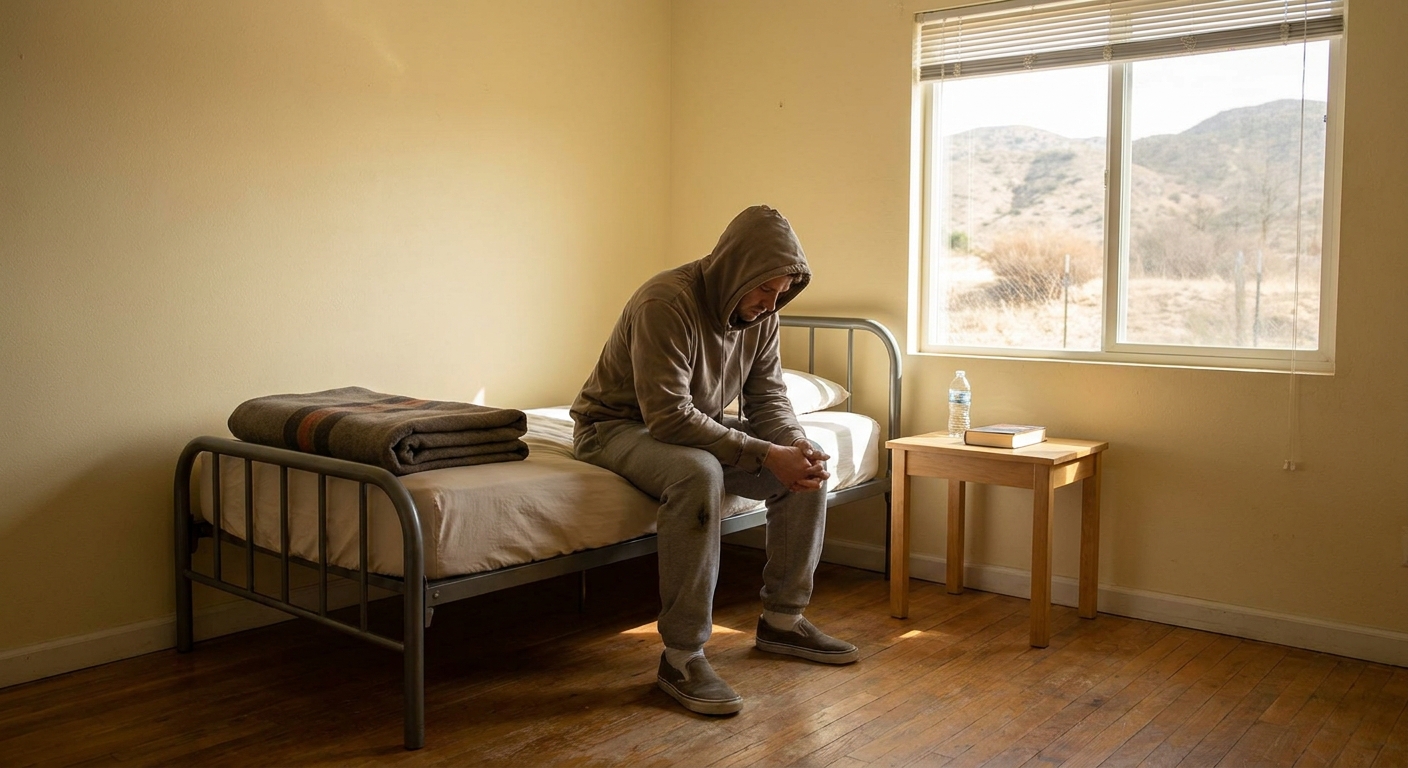
Riverside County has a substance use problem that the numbers make hard to ignore, and if you are researching drug addiction treatment in Riverside, CA, you are already doing the most important thing: taking it seriously before it gets worse.
What the numbers say about riverside county
According to the California Department of Health Care Services, Riverside County consistently reports among the highest rates of drug-related emergency department visits in Southern California, with opioids and methamphetamine driving the largest share of those cases. SAMHSA’s 2022 National Survey on Drug Use and Health estimated that roughly 20 percent of adults in the Inland Empire region meet criteria for a substance use disorder in any given year. The harder number to sit with: fewer than 10 percent of those individuals receive any formal treatment.
That gap exists for several reasons, cost and confusion about where to start being the two most common. This guide addresses both directly so that the distance between knowing you need help and actually getting it is as short as possible.
Who shows up for treatment, and why it works regardless
People arrive at treatment programs in Riverside through several doors. Some come because a judge, probation officer, or parole condition required it after a DUI or drug-related charge. Others walk in because a spouse issued an ultimatum, or a doctor flagged a problem. A smaller number come entirely on their own, with no outside pressure at all.
A 2016 study published in the Journal of Substance Abuse Treatment analyzed outcomes for 1,800 participants across voluntary and legally mandated treatment groups and found no statistically significant difference in long-term sobriety rates between the two. The mechanism is straightforward: behavioral change happens inside the treatment process, not in the motivation that preceded it. What this means in practice is that your reason for being here does not determine your result. Showing up, under any circumstance, is the move that matters.
Levels of care available in riverside
SAMHSA’s Treatment Improvement Protocol 47 identifies matching level of care to clinical severity as one of the strongest predictors of treatment success. The continuum runs from medically supervised detox at the most intensive end, through residential care, partial hospitalization (PHP), intensive outpatient (IOP), and standard outpatient at the least restrictive end. Understanding where you fall on that continuum before you make calls saves time and reduces the chance of enrolling in a program that is either more or less intensive than your situation requires.
Detox is a medical process focused on safely managing withdrawal symptoms. Residential care means living at a facility, typically for 30 to 90 days, with structured programming throughout the day. PHP involves five to six hours of daily programming while you return home each night. IOP runs roughly nine to twelve hours per week across three or four days. Standard outpatient is one to two sessions per week, appropriate for early-stage concerns or as a step-down after higher levels of care.
Outpatient options for working adults
For people who need to keep a job or manage a household during treatment, IOP and standard outpatient are the clinically appropriate options when the severity of use supports them. Programs across Riverside County offer morning and evening tracks specifically to accommodate work schedules, with many IOP sessions running in the evening so that daytime employment does not have to stop.
A 2021 study in the Journal of Addiction Medicine followed 640 employed adults through IOP and found retention and sobriety outcomes comparable to residential treatment for individuals with moderate severity and stable housing. Outpatient is not the easier path. It requires you to apply what you learn in session to the same environment where the problem developed, which is actually harder. If you are dealing with patterns tied to stimulant use or prescription dependence, outpatient is often where those patterns get examined most directly, because you are living in real time while you work through them.
Residential treatment: when to choose it
Residential care is the right starting point when dependence is severe, the home environment is unstable or actively unsafe, or previous attempts at outpatient care have not held. Medical detox is a separate and prior step for substances that carry serious withdrawal risks, particularly alcohol, benzodiazepines, and opioids.
Before enrolling in any residential program, ask directly whether medical detox is offered on-site or whether it requires a separate referral to a hospital or detox facility. That single question tells you whether the transition from detox to residential will be seamless or whether you will need to coordinate between two separate providers.
How to pay for treatment in riverside
Cost stops more people from starting treatment than almost any other factor, but it is a solvable problem in most cases. According to CMS data from 2023, individuals who verify their insurance benefits before seeking treatment are significantly more likely to access covered services than those who assume they are not covered. Payment pathways exist across every income level in Riverside County.
Medi-cal coverage
Riverside County participates in the Drug Medi-Cal Organized Delivery System (DMC-ODS), which means Medi-Cal covers a full range of substance use disorder services including outpatient counseling, IOP, residential treatment, and medication-assisted treatment when clinically indicated. Coverage is not limited to one level of care. The concrete first step: call Riverside University Health System Behavioral Health at (951) 955-2105 to verify your eligibility before assuming cost is a barrier.
Private insurance and PPO plans
The Mental Health Parity and Addiction Equity Act requires insurers to cover substance use disorder treatment at the same level as other medical conditions. In practice, this means your PPO plan is required to cover IOP and residential care if it covers comparable medical services, though prior authorization is common. Call the member services number on the back of your insurance card and ask specifically about substance use disorder benefits, in-network residential and IOP providers in Riverside County, and what the authorization process looks like. Do this call before touring any facility, because knowing your coverage in advance changes which questions you ask during tours.
Low-cost and sliding-scale options
Riverside University Health System operates county-funded programs with sliding-scale fees based on income, and nonprofit providers across the county offer similar structures. SAMHSA’s treatment locator at findtreatment.gov is a free, searchable tool that filters by location, payment type, and language of service. For Spanish-speaking individuals and families, county behavioral health programs explicitly offer services in Spanish, and staff are available to walk through options with you in whichever language is clearer.
Specialized programs to look for
A 2020 study in Drug and Alcohol Dependence followed 1,200 participants with co-occurring mental health diagnoses through dual-diagnosis treatment and found 34 percent better long-term sobriety rates compared to programs that treated addiction in isolation. The takeaway is direct: if depression, anxiety, trauma, or anger are part of what is driving use, a program that only addresses the substance is treating half the problem.
Riverside Recovery Resources approaches treatment exactly this way, addressing the pattern beneath the substance and working through co-occurring depression, anxiety, anger, and trauma within the same plan. Services are available in both English and Spanish. When evaluating any facility, ask directly whether co-occurring mental health conditions are treated within the program or referred out.
Court-ordered and DUI programs
In Riverside County, court-certified programs must meet specific state licensing requirements under the California Department of Health Care Services and are required to report compliance back to the court or probation department. A program that is not court-certified will not satisfy your legal obligation, regardless of how good the clinical programming is.
Before starting any program tied to a legal requirement, ask for the facility’s DHCS license number and confirm with your Riverside County probation officer or the court clerk that the program satisfies your specific order. Making one phone call in advance is far less complicated than explaining to a judge why the program you completed did not count.
Medication-assisted treatment (MAT)
A 2019 SAMHSA report found that medication-assisted treatment with buprenorphine or naltrexone reduces opioid overdose deaths by up to 50 percent and significantly improves treatment retention. The three FDA-approved medications, methadone, buprenorphine, and naltrexone, each work differently and are appropriate for different situations. Methadone is dispensed through licensed opioid treatment programs. Buprenorphine can be prescribed by certified physicians. Naltrexone blocks opioid receptors and carries no dependency risk.
MAT is evidence-based medicine. It is not substituting one substance for another, and the research on this point is not ambiguous. If opioids are the primary substance, ask any program you contact whether MAT is offered on-site or through a coordinated medical referral. Riverside Recovery Resources does not provide MAT or medical detox directly, but the team will help you identify the safest starting point and connect you with appropriate medical resources before counseling or IOP begins. If you are using opioids, talk with a medical provider about withdrawal and medication options as part of your planning process.
For people working through opioid dependence in an outpatient setting, combining medical support with structured counseling produces better outcomes than either approach alone.
What to ask before you enroll
Accreditation from the Joint Commission or CARF signals that a facility meets independently verified standards for clinical quality and safety. Beyond accreditation, these are the specific questions that give you the clearest picture of whether a program fits your situation:
Is the program certified for court-ordered and DUI treatment? Do you offer or coordinate MAT for opioid dependence? What are your evening and weekend hours? Do you provide services in Spanish? What does my insurance cover at this facility, and do you handle prior authorization?
Bring these questions to the first phone call, not the tour. The answers tell you quickly whether a second conversation is worth your time. For more on how stimulant addiction including meth and cocaine responds to structured outpatient treatment, that context helps frame the right questions about programming intensity.
What to try this week
Call SAMHSA’s National Helpline at 1-800-662-4357 today. The call is free, confidential, and available in Spanish. Counselors are available 24 hours a day, seven days a week, and can identify local Riverside County options matched to your insurance and level of care. If you prefer to start with a local point of contact, call Riverside University Health System Behavioral Health at (951) 955-2105. Do not wait until you have finished more research. The next call is the only step that matters right now.
Frequently asked questions
How long does drug addiction treatment typically last in riverside?
Length of treatment depends on the level of care and the severity of use. Standard outpatient programs run anywhere from eight to twelve weeks. IOP typically runs sixty to ninety days. Residential programs most commonly run thirty, sixty, or ninety days, with longer stays available when clinically indicated. Research consistently shows that longer engagement in treatment produces better outcomes, so the goal is to stay enrolled through the full recommended duration rather than exit as soon as symptoms stabilize.
Can I keep my job while in treatment in riverside?
Yes, in most cases. IOP and standard outpatient are designed specifically for people who cannot step away from employment. Evening and morning scheduling tracks are common across Riverside County programs. The Family and Medical Leave Act (FMLA) also provides job protection for eligible employees seeking treatment for a substance use disorder, so it is worth checking your eligibility with an HR representative before assuming work will be a problem.
What if I do not speak english fluently?
County behavioral health services in Riverside are available in Spanish, and SAMHSA’s National Helpline (1-800-662-4357) operates in both English and Spanish. Riverside Recovery Resources provides counseling and IOP services in Spanish as well. Language is not a barrier to accessing care in Riverside County.
Will my employer or family find out I am in treatment?
Treatment records are protected under federal confidentiality law, specifically 42 CFR Part 2, which is stricter than standard HIPAA protections. Providers cannot disclose that you are in treatment, or share any details of your care, without your written consent. The only exceptions involve immediate safety concerns or specific court orders.
What is the difference between IOP and standard outpatient?
Intensive outpatient (IOP) involves nine to twelve or more hours of structured programming per week, typically spread across three to four days, and includes group therapy, individual counseling, and skills development. Standard outpatient is one to two sessions per week and is most appropriate as a step-down from a higher level of care or for early-stage concerns. IOP is the more appropriate starting point for moderate dependence and is the level most commonly ordered by courts for DUI-related treatment requirements.
Does court-ordered treatment actually work?
Research published in the Journal of Substance Abuse Treatment shows that outcomes for court-mandated participants are comparable to those for voluntary participants when the same quality of care is provided. Courts refer people to treatment because the data supports it. Completing a court-ordered program is both a legal requirement and a genuine clinical opportunity, and programs at Riverside Recovery Resources treat both with equal seriousness.