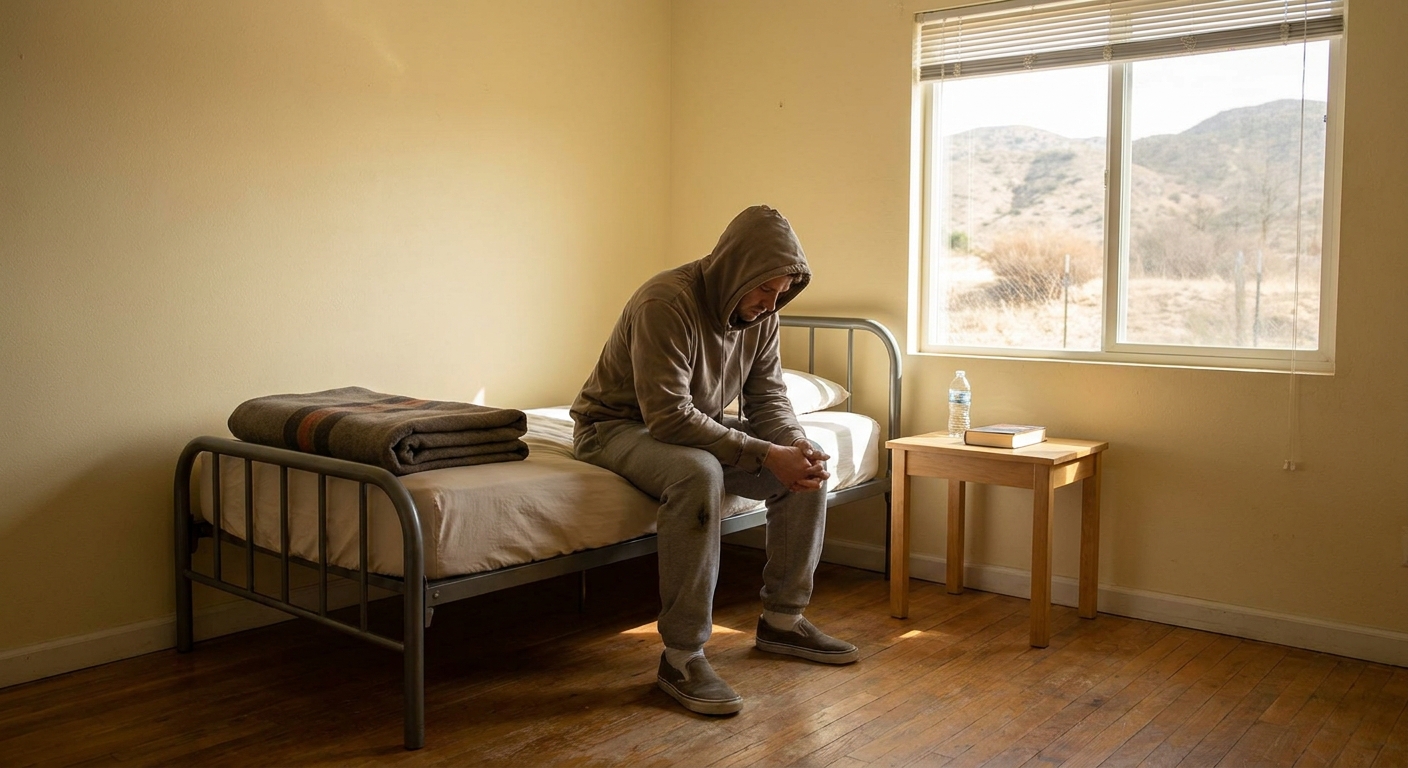
A 2022 RAND Corporation study of 3,400 probation cases found that 34% of compliance failures were administrative, not behavioral. The person completed the class. The paperwork just didn’t hold up. Knowing how to show proof of court ordered class completion, before your hearing date, is what keeps a real accomplishment from disappearing into a filing gap.
What you’ll need before you start
Gather these items before your court date: your case number, the judge’s original order, and the name of the provider you used. Having these three things in hand before you request any documentation cuts the back-and-forth significantly. If your original order is buried somewhere, request a copy from the clerk’s office using your case number. You’ll need it to confirm the exact program type and required hours.
Step 1: confirm your class meets the court’s requirements
Courts reject documentation when the class itself didn’t qualify. This is more common than most people expect, and it’s a problem worth ruling out before you invest time in gathering paperwork.
Check the provider’s approval status
Contact the Riverside County court clerk or your probation officer directly to confirm the program appears on the approved provider list. Approval status is tied to the provider, not the course name. A class called “anger management” isn’t automatically acceptable; the specific organization running it needs to be on the county’s list. For court-ordered drug and alcohol programs in Riverside County, this verification step is especially worth doing early, since DUI education programs have specific state-level approval requirements beyond the county list.
Verify hour and session requirements
Courts count hours, not class titles. Pull your original order and confirm the required hours match what you completed. Partial completion is treated as non-completion, full stop. If your order says 16 hours and you attended 14, the certificate you receive will reflect what you actually finished, and the court will notice the shortfall.
Step 2: request your official completion certificate
A 2021 Bureau of Justice Assistance report tracking 5,800 court-mandated participants found that certificates lacking provider contact information were rejected at twice the rate of complete documents. Ask your provider for a completion certificate the day you finish your final session. Don’t wait for them to mail it.
What the certificate must include
The certificate needs your full legal name matching your court ID, the date of completion, program name, total hours completed, the provider’s name, address, and phone number, and the signature of a licensed counselor or program director. If any of these elements are missing, the document is incomplete from the court’s perspective, regardless of what you actually completed.
How to request it if you completed the class remotely
Online providers issue digital certificates. Download the PDF immediately after your final session and request a printed, signed version by mail. Courts in Riverside County accept printed digital certificates only when they carry a wet signature or a verified electronic signature. A screenshot or an email confirmation is not sufficient.
Step 3: complete the CR-220 form if required
California courts use Form CR-220 (Proof of Enrollment or Completion for Alcohol or Drug Program) for DUI and substance-related cases. Check your original order. If alcohol or drugs are involved, this form is mandatory alongside your completion certificate.
Where to get the CR-220
Download it directly from the California Courts self-help website or pick one up at the Riverside Hall of Justice clerk’s window. Your treatment provider fills out most of the form; you sign and submit it. If you’re working with an established program, the staff there will be familiar with this process and can walk you through which sections require their input.
How to get your provider to complete it
Bring the blank CR-220 to your provider at your final session. Don’t assume they’ll have one on hand. Allow at least five business days for processing if you’re mailing it back to them after your last class. Building this into your timeline before the court date prevents a last-minute scramble.
Step 4: make copies and create a document package
A 2023 National Center for State Courts study of 12,000 case files found that defendants who submitted organized documentation packets resolved compliance hearings 41% faster than those who submitted single documents. Organization isn’t a formality here. It’s a real time-saver when you’re standing in front of a judge.
What to include in your packet
Include the original completion certificate, the completed CR-220 if applicable, a copy of the court order showing the required program, and a photo ID matching the name on all documents. Keep one full copy of the entire packet for yourself before you submit anything. If a program included life skills components alongside counseling or reentry programming, include documentation for each component separately rather than assuming the completion certificate covers everything.
How to store backup copies
Save digital copies to a secure cloud folder and email them to yourself as an additional backup. Court records get lost. Your personal copy is your protection, and having it accessible from your phone means you’re never caught without it.
Step 5: submit proof to the right person before your deadline
Submitting proof to the wrong office is one of the most common reasons compliance goes unrecorded. Identify exactly who receives your documentation: the clerk of the court, your probation officer, or both.
Submitting to the court clerk
File your packet at the clerk’s office of the courthouse where your case is active. Request a date-stamped receipt on your copy. This is your proof of submission. Don’t rely on the clerk to notify your judge; ask specifically how documents are routed to the courtroom.
Submitting to your probation officer
If you’re on probation or parole, your officer files a separate compliance report. Submit your certificate to your officer at least two weeks before your court date and get written confirmation that it was received and logged. Verbal confirmation is not enough. A text message or email response works. A sticky note does not.
Step 6: follow up to confirm it’s on the record
A 2020 Urban Institute study of 7,200 court-monitored participants found that 22% of verified completions were not reflected in court records at the time of the compliance hearing, most due to filing lag rather than error. Follow up one week after submitting your documents.
How to check with the clerk’s office
Call the clerk’s office with your case number and ask whether your completion documentation has been associated with your file. If it hasn’t, resubmit in person with your stamped receipt in hand. The receipt proves you already filed on time, which matters.
How to confirm with your attorney
If you have a public defender or private attorney, send them copies of everything the same day you file. Ask them to confirm the documents appear in the case system before your hearing date. Attorneys can flag discrepancies faster than you can from the outside, and a missing document is much easier to fix with two weeks to spare than with two days.
Troubleshooting: common proof problems and how to fix them
The certificate has the wrong name
Contact your provider immediately with a copy of your court ID. Providers are required to issue corrected certificates. Allow 48 to 72 hours and make the request in writing so you have a record of it. Don’t show up to your hearing hoping the judge will overlook a name discrepancy.
The provider has closed or gone out of business
Contact the California Department of Health Care Services or the Riverside County Behavioral Health Department. Both maintain records from defunct approved providers. Bring any payment receipts, attendance logs, or confirmation emails that verify your enrollment and attendance dates. Knowing what to look for in a substance abuse program before you enroll, specifically whether the organization has a long track record, reduces the risk of this situation entirely.
You’re running out of time before your court date
File a written request for a deadline extension before your deadline, not after. Judges in Riverside County are more likely to grant extensions requested proactively. Attach documentation showing your enrollment status and your expected completion date. A judge seeing that you’re enrolled and progressing is in a very different position than a judge seeing nothing at all.
Frequently asked questions
Can I submit a digital certificate, or does it have to be printed?
Riverside County courts accept printed digital certificates, but only when the document carries a wet signature or a verified electronic signature from the provider. A PDF displayed on a phone screen or an email printout without a signature does not meet the standard. Request a signed printed copy from your provider before your hearing.
What if my name on the certificate doesn’t exactly match my court ID?
Even minor differences, like a middle initial that appears on one document but not the other, can create delays. Contact your provider the moment you notice the discrepancy and request a corrected certificate in writing. Bring both versions to your hearing along with your ID to show the court you addressed it.
Do I need the CR-220 form even if I have a completion certificate?
For DUI and drug-related cases in California, yes. The CR-220 is a separate required form and doesn’t replace the completion certificate. Check your original court order for language about alcohol or drug programming. If that language is there, plan on submitting both documents.
What if I completed a class that also covered life skills or reentry topics?
Courts look for the specific program type listed in the order, whether that’s DUI education, anger management, or parenting classes. If your program included additional skills-based content as part of the curriculum, make sure the certificate clearly names the required component. Ask your provider to confirm the certificate language matches what the court is looking for.
How far in advance should I submit my documentation?
Submit at least two weeks before your hearing date. This gives the clerk’s office time to attach the documents to your file, gives your probation officer time to file a compliance report, and gives you time to follow up if something isn’t showing up in the system.
What to try this week
Pull out your court order today and locate the exact program requirement and deadline. If your paperwork is already complete, call the clerk’s office with your case number and confirm the documents are attached to your file. One phone call before your hearing is worth more than any last-minute scramble at the courthouse.