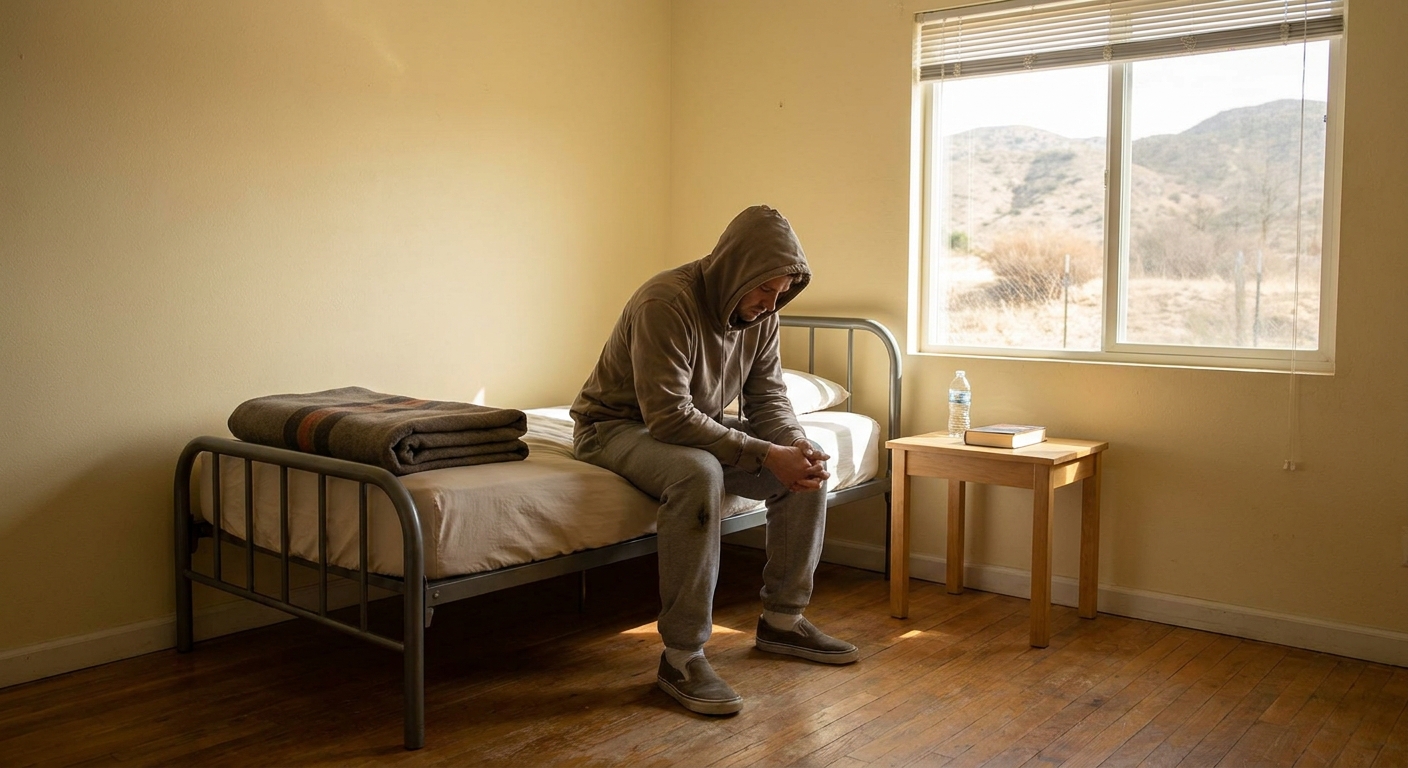
Most people leaving treatment understand they shouldn’t use. What they often don’t have is a clear answer to a harder question: how do you handle a Tuesday when everything goes wrong and the only tool you’ve ever trusted is the one you’re trying to put down? That’s the gap a life skills program in recovery is built to close, and understanding what it actually covers can change how you approach the work ahead.
What a life skills program is (and what it isn’t)
A life skills program is practical training in the daily competencies that substance use eroded or, for many people, prevented from developing in the first place. It teaches you how to manage a household, hold a job, handle conflict, and get through a difficult day without using.
That’s different from therapy, which focuses on understanding why you used. It’s different from 12-step work, which addresses the spiritual dimension of recovery. A life skills program addresses the how. Not the root causes, not the higher power, but the mechanics of daily life that collapse when addiction is running the show and that have to be rebuilt, deliberately, once it stops.
For people completing a court-ordered life skills requirement, this distinction matters. A court requirement isn’t asking you to undergo deep psychological analysis. It’s asking you to demonstrate that you can function as a stable adult in the community. Life skills programming is specifically designed to meet that standard, and a long-standing organization like Riverside Recovery Resources, which has been operating in Riverside and Lake Elsinore since 1985, offers this as a standalone program that can run alongside counseling, DUI programming, or reentry services.
Why these programs exist: the gap between getting sober and staying sober
According to SAMHSA’s national survey data, a substantial portion of people who complete addiction treatment relapse within the first year, with the highest-risk window falling in the first 90 days after discharge. The reason isn’t usually a failure of willpower or motivation. It’s practical skill deficits, the absence of basic tools for managing the pressure points that made substances feel necessary in the first place.
Most people leave treatment knowing they shouldn’t use. They leave with far less certainty about how to pay a bill that’s two months late, how to talk to a manager when they’re struggling, or how to fill six hours on a Saturday when nothing is scheduled and the urge is loud. A life skills program fills exactly that gap. It takes the period between clinical discharge and sustainable daily life and populates it with repeatable strategies that hold up under real conditions.
Emotional regulation: the skill that prevents relapse before it starts
A 2019 study published in the Journal of Substance Abuse Treatment, examining over 1,200 adults in outpatient treatment, identified emotional dysregulation as one of the strongest predictors of early relapse. People who lacked the ability to identify, tolerate, and redirect difficult emotions were significantly more likely to use within the first six months of treatment. The mechanism is direct: if you can’t manage an emotion, the fastest exit you know is the one that’s worked before.
Life skills programs teach emotional regulation as a concrete practice, not a concept. You learn to identify triggers before they peak. You learn to name what you’re actually feeling with enough precision to do something useful with it, distinguishing, for example, between frustration and fear, since those two emotions require different responses. You practice grounding techniques in simulated real-world moments: a tense call from a landlord, a confrontation with a coworker, the moment before a probation check-in when anxiety is high.
The technique taught most consistently across these programs is STOP: Stop what you’re doing, Take a breath, Observe what’s happening in your body and mind, and Proceed with intention rather than reaction. It takes about 90 seconds. Practice it in low-stakes moments first so it’s available when the stakes are high.
Stress management as a daily practice
A 2013 study published in Psychoneuroendocrinology found that elevated cortisol levels, the body’s primary stress hormone, directly increased craving intensity in people with substance use disorders. Stress isn’t just uncomfortable. Physiologically, it activates the same neural pathways that addiction ran on. Unmanaged stress is a biological on-ramp to relapse, not a metaphor for one.
Life skills programs address this with a set of repeatable techniques rather than general advice to “reduce stress.” Breathing protocols, specifically slow diaphragmatic breathing with an extended exhale, reduce cortisol measurably within minutes. Structured worry time, where you designate 20 minutes in the afternoon to think through concerns instead of carrying them all day, prevents anxiety from bleeding into every hour. Physical movement, even a 10-minute walk, resets the nervous system in ways that conversation alone can’t.
The practical step here is simple: pick one of these techniques, not all three, and use it the next time you feel stress building, before you reach for your phone, before you call someone to vent, before you do anything else. One intervention, practiced consistently, builds more resilience than a menu of options used randomly.
Coping skills: building a toolbox that works in real life
Research from the National Institute on Drug Abuse consistently shows that people with three or more reliable coping strategies have measurably better 12-month recovery outcomes than those with one or none. The gap isn’t between people who cope and people who don’t. Everyone copes with something. The gap is between healthy coping and the suppression or avoidance strategies that feel like coping but actually compound the problem.
Suppression is pushing the feeling down and getting on with it. Avoidance is staying busy, sleeping too much, or scrolling until the feeling passes. Both provide short-term relief and long-term erosion. A life skills program teaches you to distinguish between the two and replace them with strategies that build capacity over time.
Those strategies include cognitive reframing (identifying the thought driving the feeling and testing whether it’s accurate), behavioral activation (doing something specific rather than waiting to feel motivated), urge surfing (observing a craving without acting on it, watching it peak and pass like a wave), and reaching out to a support person before the situation escalates rather than after. Each of these is practiced inside sessions and assigned as homework so they exist in your actual life, not just in a classroom.
Start by identifying your current default coping behavior. Name it honestly. Then pick one of the above alternatives and use it once this week in a moment where the default would normally kick in.
Developing a routine: why structure is a recovery tool
A study published in the American Journal of Drug and Alcohol Abuse found that unstructured time is one of the highest-risk conditions for relapse in early recovery. The mechanism is straightforward: when nothing is scheduled, craving fills the space. Boredom and open-ended time aren’t just uncomfortable, they actively allow the brain’s craving circuits to dominate because there’s no competing demand for attention.
Life skills programs treat routine as a recovery intervention, not a lifestyle preference. The curriculum teaches you to build a daily structure using anchor times: a consistent wake time, a fixed meal, a scheduled point of social contact. Sleep hygiene gets specific attention because sleep disruption accelerates emotional dysregulation and craving, creating a feedback loop that’s hard to break once it starts. Meal consistency matters for the same reason; low blood sugar at 3 p.m. looks remarkably similar to emotional instability and is often mistaken for it.
The action here is one of the most straightforward in this entire program: before you go to sleep tonight, write out tomorrow’s schedule anchored to three fixed times. Wake time, one midday commitment, and one evening activity. That structure alone reduces the unguarded hours that make early recovery genuinely dangerous.
Financial literacy and money management
A 2022 study in Drug and Alcohol Dependence found that financial stress is one of the most consistent relapse triggers in early recovery, particularly for people managing debt, damaged credit, or no formal financial history as a result of years of active addiction. Financial chaos isn’t background noise in recovery. It’s a direct threat to it.
Life skills programs address money management at the most practical level. You learn to read a pay stub, prioritize which bills to pay first when you can’t pay all of them, open a bank account if you don’t have one, and recognize predatory financial products like payday loans that are marketed to people in financial vulnerability. Budgeting is taught as a single-column exercise: income on one side, non-negotiable expenses on the other. No complicated spreadsheets, no apps that require a credit score to access. Just a clear picture of what’s coming in and what has to go out.
For people returning from incarceration or navigating a period of reduced income while completing program requirements, this foundation is often the difference between a stable first year and one that collapses under financial pressure. Build that single-column budget this week. Income and non-negotiables only. See what you’re actually working with.
Employment readiness and workplace skills
A 2020 study in the Journal of Substance Abuse Treatment found that employment in the first 18 months of recovery significantly reduces relapse risk, independent of treatment type or intensity. Having a job isn’t just about income. It provides structure, accountability, social connection, and a daily reason to stay stable. Employment is a recovery stabilizer with direct clinical backing.
Life skills programs teach the practical elements of getting and keeping a job: resume writing, interview preparation, and workplace communication. Significant time goes into one topic that standard job-readiness programs often avoid: how to explain a gap in employment history honestly without oversharing. There’s a version of this conversation that is truthful, professional, and protective of your privacy, and it’s a skill that can be rehearsed.
For people completing requirements in Riverside County with a prior record, the program also addresses how to identify fair-chance employers and navigate background check disclosures. Knowing what your probation program requires before you start job searching helps you sequence the steps correctly and avoid situations where a new employer’s start date conflicts with program completion. Identify one specific job to apply for this week, even if the resume isn’t perfect yet. Starting is the step.
Communication and interpersonal skills
A 2017 study in Addictive Behaviors found that interpersonal conflict, particularly conflict driven by poor communication patterns like aggression and passive avoidance, is one of the most common proximate triggers for relapse. Relationships don’t just support recovery. When they’re fractured by poor communication, they actively threaten it.
Life skills programs teach communication as a set of learnable behaviors, not as a personality trait you either have or don’t. Assertiveness gets careful attention because it lives between two extremes that most people in recovery have used as substitutes: aggression (which pushes people away and creates conflict) and passivity (which suppresses needs until they explode). Active listening, specifically the practice of reflecting back what someone said before responding, reduces the escalation cycle in difficult conversations.
For people under court order, this skill is especially practical. You’re communicating simultaneously with probation officers, treatment staff, employers, and family members, each of whom has different expectations and authority. Knowing how to code-switch appropriately across those relationships without feeling like you’re performing for each one is something these programs address directly.
The three-part format that programs teach is: state the specific situation factually, name your need without blame, and propose a concrete outcome. Practice that structure in one real conversation this week.
Rebuilding family relationships
A substantial body of SAMHSA research identifies family involvement as one of the strongest protective factors in long-term recovery. Family support reduces relapse risk, improves treatment engagement, and increases the likelihood that someone stays connected to care when things get hard. The inverse is also true: damaged family relationships, particularly ones left unaddressed, are a persistent stressor that undermines recovery from the inside.
Life skills programs address family communication directly. That includes how to have honest conversations about the past without either minimizing the harm or rehearsing it as an identity. It includes how to rebuild trust incrementally, through consistent behavior over time rather than a single conversation. For Spanish-speaking families in the Inland Empire, culturally responsive programs recognize the additional weight that family loyalty, shame, and the concept of not burdening others carry in these conversations. Those dynamics are addressed explicitly, not assumed away.
Identify one family relationship you’ve been avoiding and bring it into your next session with a counselor. Not to fix it in the session, but to name it as something you’re working on.
Avoiding high-risk situations: recognizing and exiting danger
Research published in Addiction found that exposure to environmental cues associated with past use, people, places, and objects linked to using, increases craving intensity and relapse risk by measurable margins. Returning to familiar using environments activates the brain’s learned associations with such precision that the craving response can be nearly automatic. This isn’t a character flaw. It’s neuroscience.
Life skills programs teach a practical framework for managing this: identifying personal high-risk people, places, and emotional states. The HALT model (Hungry, Angry, Lonely, Tired) gives you a four-point checklist to run before any situation that feels risky. Beyond identification, the program teaches you to build an exit plan in advance and to rehearse it specifically, not just in general terms. “I’ll leave if things get uncomfortable” is not an exit plan. “I’ll tell my ride I need to go at 9 and I’ll wait outside if I have to” is one.
For anyone completing court-ordered drug and alcohol requirements in Riverside County, documenting your participation in this kind of programming matters beyond your own recovery. It demonstrates to the court that you’ve engaged with structured skill-building, not just attended sessions. Write down three personal high-risk situations and one specific exit strategy for each before your next session.
Personal responsibility and accountability
Research published in the Journal of Studies on Alcohol and Drugs has consistently found that internal locus of control, the belief that your choices, not your circumstances, determine your outcomes, is a strong predictor of long-term recovery. People who attribute their recovery to external factors (luck, a good counselor, favorable circumstances) are more vulnerable when those factors change. People who understand their own agency stay stable across a wider range of conditions.
Life skills programs teach this shift directly and carefully. Accountability is not the same as self-punishment. Taking responsibility means owning choices and changing behavior going forward. It does not mean rehearsing shame in a loop, which is not accountability, it’s a relapse risk. The program distinguishes between the two because the distinction has clinical consequences.
Look at one area of your life, finances, a specific relationship, your employment situation, where you’ve been waiting for something external to change before you act. Name one thing you control in that situation and do it this week. One action, not a plan.
Support networks and asking for help
A 2020 study published in Drug and Alcohol Dependence found that people with fewer than three supportive relationships in their immediate network had significantly worse recovery outcomes at 12 months compared to those with three or more. Social isolation doesn’t just make recovery harder emotionally. It removes the early-warning system that catches a person before a lapse becomes a relapse.
Life skills programs address social connection as a practical skill, not just an encouragement. You learn how to identify which people in your life are genuinely safe supports versus relationships that are connected to using. You learn how to use peer support groups effectively, which means engaging rather than observing, and showing up even when you don’t feel like you have anything to contribute. And you learn to make contact with a support person before a craving peaks, not after.
That last point is worth sitting with. Most people wait until they’re in crisis to reach out, which is the hardest moment to make the call. The program teaches you to build the habit of contact during ordinary moments so that when an urgent moment arrives, the behavior is already practiced. Understanding what happens if you don’t complete required programming can also clarify the stakes, but the deeper reason to stay connected is simpler: people in recovery who stay in contact with others who understand the work are the ones who stay in recovery.
Add one person’s number to your phone this week who you commit to calling before you act on a craving. One person, one commitment.
The foundation you build on
A life skills program isn’t the final destination in recovery. It’s the structure that makes everything else possible. Therapy works better when you can show up to sessions with a stable week behind you. Twelve-step work lands differently when you’re sleeping regularly, managing your money, and not in a state of constant crisis. Employment becomes sustainable when you can communicate at work and handle conflict without shutting down or blowing up.
The place to start is where the outline began: emotional regulation and routine. These two skills are the base. Everything else, the financial management, the communication repair, the employment readiness, builds on the foundation of knowing what you’re feeling and having a structure that contains it.
If you’re completing this program as part of a court or probation requirement, getting clear on how completion is documented is a practical early step. But approach the content as if the requirement is beside the point. The skills covered in a life skills program are the ones that keep your life standing after the requirement ends.
Frequently asked questions
How long does a life skills program in recovery typically last?
Program length varies based on the provider and the specific requirement you’re completing. Standalone life skills programs typically run between 10 and 16 weeks, though some are shorter when paired with other concurrent programming. Riverside Recovery Resources can pair life skills with counseling, DUI classes, or reentry programming, so the total timeline depends on what your court order or probation requires. Get a clear breakdown of hours required at intake so you can plan your schedule realistically.
Can a life skills program count toward a court order or probation requirement?
Yes, in many cases it can. Courts and probation departments in Riverside County frequently accept life skills programming from established organizations as part of a broader treatment or compliance plan. The key is that the provider must be recognized and able to document your completion in a format the court accepts. Riverside Recovery Resources has been providing court-accepted completion documentation since 1985. Confirm with your probation officer or attorney exactly which programs satisfy your specific requirement before enrolling.
Do I need to be currently sober to enter a life skills program?
Most life skills programs don’t require a specific period of sobriety before enrollment. Some programs are designed to run concurrently with early recovery, including active treatment. If you’re in a period of active use and want to start, talk to the program staff at intake. They will assess where you are and what level of support makes sense alongside the life skills curriculum.
Is the program available in spanish?
At Riverside Recovery Resources, court-related programs including life skills are delivered in both English and Spanish at the Riverside and Lake Elsinore offices. If you or a family member is more comfortable in Spanish, that should not be a barrier to enrollment or participation. Ask about Spanish-language availability when you call.
What if I have a criminal record? does that affect enrollment?
Having a prior record does not disqualify you from enrolling in a life skills program. In fact, reentry programming is one of the areas where these programs are specifically designed to help. The employment readiness component addresses background checks, fair-chance employers, and how to navigate disclosures professionally. Programs that serve Riverside County’s reentry population understand the practical realities of that situation and build their curriculum accordingly.
How is program completion documented?
Completion is typically documented through an official certificate or letter issued by the program provider, showing your name, the program name, the number of hours completed, and the date of completion. This document is what you bring to court, your probation officer, or your attorney to demonstrate you’ve fulfilled the requirement. Keep a copy for yourself. Ask the program staff at intake exactly what the completion paperwork looks like and who it gets sent to, since some courts prefer that providers submit documentation directly.